Qigong
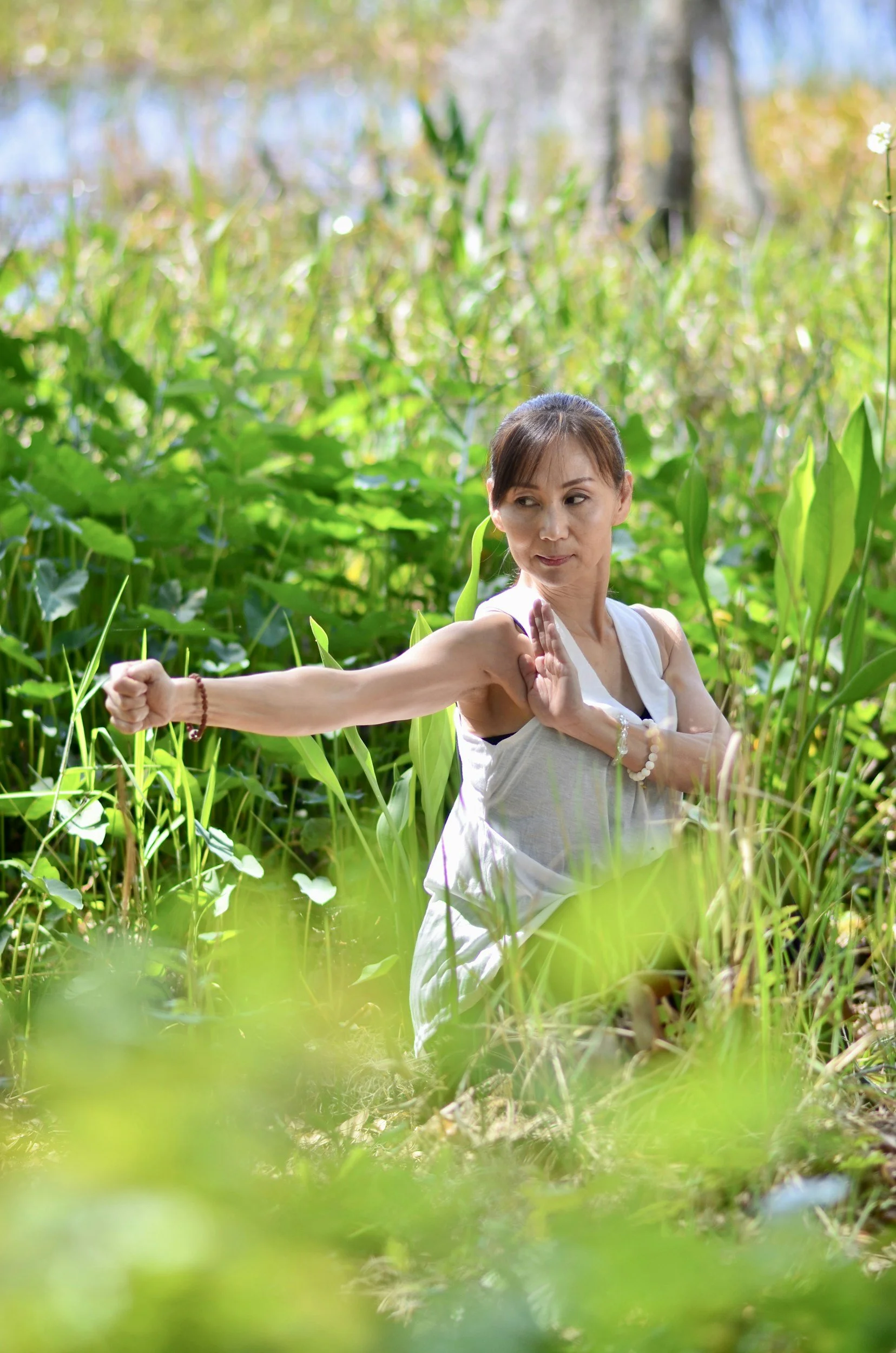
Qigong, pronounced "chi gong", is a practice that originated in China that uses movement, breath, and meditation to improve health and wellbeing.
The term “qigong” is a combination of two words: "qi," which means “subtle breath” or “vital energy,” and "gong," which translates to “skill cultivated through steady practice.” Together, the words describe an age-old practice that harnesses the power of breath, movement, and intention setting to create health and balance within the body.
Qigong follows traditional Chinese medicine principles, which claim that qi flows through our bodies. According to traditional Chinese medicine, people tend to feel their best when qi travels freely, but health problems can crop up if the energy becomes stagnant or blocked in a certain area of the body. Through simple poses and patterned breathwork, qigong is believed to remove obstacles to promote a healthy flow of qi.
The slow, gentle movements are believed to warm up your tendons, ligaments, and muscles; mobilize the joints; and promote the circulation of body fluids (like blood, synovial, and lymph).
Meanwhile, deep breathing, which plays a central role in qigong, calms the sympathetic (fight-or-flight) nervous system and activates the parasympathetic (rest-and-digest) side of your autonomic nervous system, Bouguyon says. The autonomic nervous system regulates involuntary processes like breathing, heartbeat, and digestion.
By tapping into the parasympathetic nervous system, qigong can help reduce stress and anxiety, which has many implications for health. “Qigong offers the beautiful gift of working to quiet the mind, settle the emotions, and relax into the body,” Bouguyon says.
From the traditional Chinese medicine perspective, qigong optimises the flow of energy in your body to help mitigate or attend to any number of conditions.